The Best Types of Commercial Ovens for Restaurants
Every successful commercial kitchen depends on equipment that keeps pace with daily demand. From breakfast service through late-night dinner rushes, the oven plays a central role in food quality, speed, and consistency. Get familiar with the best types of commercial ovens for restaurants to narrow the field and invest in equipment that matches your production goals.
Matching the Oven to Your Restaurant
Remember that no single oven fits every restaurant. A neighborhood bakery has very different needs than a busy steakhouse or a high-volume pizza shop. The right purchase starts with a close look at your menu, daily output, available floor space, and utility connections. Smart planning today prevents expensive equipment changes later.
Think about your busiest service period as well. If hundreds of meals leave the kitchen during lunch, your oven must keep up without slowing the entire line. Capacity matters just as much as cooking performance.
Convection Ovens
Convection ovens remain one of the most popular choices in commercial kitchens for good reason. Internal fans circulate hot air throughout the cooking chamber, so food cooks evenly from every angle. This style works well for baked goods, roasted vegetables, casseroles, proteins, and countless other menu items.
Restaurants appreciate the versatility of convection ovens because one unit handles many different tasks throughout the day. Faster cook times can also improve ticket speed during busy hours. Cafes, diners, schools, hotels, and full-service restaurants all benefit from this dependable piece of equipment.
Another advantage comes from consistency. Every pan receives similar heat exposure, reducing hot spots that create uneven results. Staff members spend less time rotating trays, and customers receive meals with reliable quality.
Deck Ovens
Deck ovens remain a favorite for artisan bakeries and pizzerias. Thick stone or ceramic decks absorb heat and transfer it directly into bread, pizza dough, and pastries. The result includes crisp crusts, excellent browning, and a texture that many chefs prefer.
Temperature stability also stands out. Once the deck reaches operating temperature, it holds heat very well through continuous production. That steady environment creates dependable results across large batches.
Although deck ovens excel with baked products, many restaurants also use them for roasted meats and specialty dishes that benefit from radiant heat. Their versatility extends beyond pizza alone.
Conveyor Ovens
Restaurants with nonstop production usually appreciate conveyor ovens. Food travels through a heated chamber on a conveyor belt, allowing each item to cook for a preset amount of time. This automated process creates outstanding consistency from one order to the next.
Pizza chains rely heavily on conveyor ovens, but their usefulness extends much further. Sandwich shops, cafeterias, and quick-service restaurants use them for flatbreads, appetizers, chicken products, and baked desserts.
Training also becomes much easier. Employees load food onto one side, collect finished products from the other, and follow standardized recipes without constant supervision. That consistency supports faster service during peak business hours.
Combination Ovens
Combination ovens combine convection heat with steam inside one cabinet. This flexibility gives chefs greater control over texture, moisture, and browning across many recipes. A single unit can roast meats, steam vegetables, bake bread, or regenerate prepared meals.
Restaurants with diverse menus appreciate this versatility. Instead of dedicating space to several different appliances, one combination oven performs multiple cooking methods throughout the day. Kitchens with limited floor space gain valuable efficiency.
Moisture control also helps preserve food quality. Proteins stay juicy, vegetables retain color, and baked products develop attractive crusts without drying out. The result feels closer to restaurant-quality craftsmanship across many different menu categories.
Rack Ovens
Large bakeries and commissary kitchens depend on rack ovens for high-volume production. Entire rolling racks loaded with sheet pans enter the oven at once, which allows dozens of products to bake during each cycle. This style dramatically reduces labor.
Employees will spend less time transferring individual trays and more time preparing the next batch. Production moves faster without sacrificing consistency. Restaurants that produce large quantities of bread, cookies, pastries, or desserts may also benefit from rack ovens. Their capacity supports continuous output during busy seasons or holiday demand.
Rotisserie Ovens
Rotisserie ovens combine visual appeal with exceptional roasting performance. Meat rotates continuously throughout the cooking cycle, allowing fat and juices to baste every piece naturally. Customers immediately notice the aroma and attractive presentation.
Many supermarkets, delis, and restaurants position rotisserie ovens near customer traffic for added merchandising value. Freshly roasted chicken becomes both a meal solution and a marketing tool. Don’t forget to learn how to properly maintain a chicken rotisserie oven so you can ensure safe, tasty results every time.
Pizza Ovens
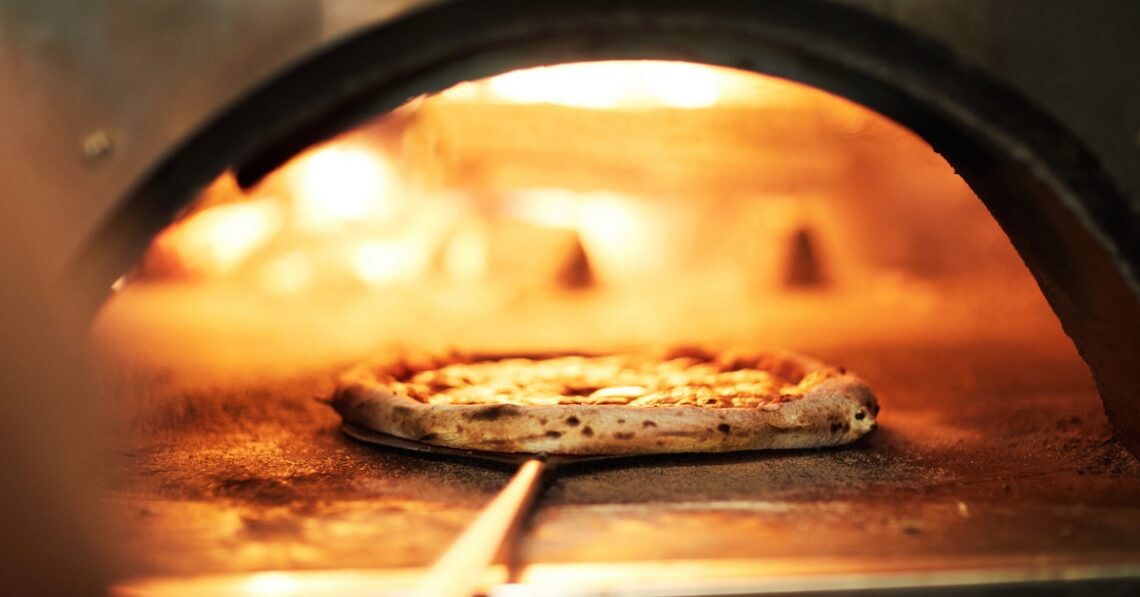
Restaurants dedicated to pizza deserve equipment built for that specific purpose. Commercial pizza ovens reach much higher temperatures than standard ovens, allowing crusts to develop the texture customers expect. Operators may choose deck, conveyor, or specialty stone pizza ovens based on production volume and menu style.
Neapolitan pizza requires different equipment than New York-style slices or pan pizza. Fast recovery times also help during dinner rushes. One pizza leaves the oven, another enters immediately, and cooking temperatures remain stable throughout continuous service.
Countertop Ovens
Not every commercial kitchen requires a large floor model. Countertop ovens provide dependable performance for smaller operations with limited space. Coffee shops, concession stands, food trucks, and convenience stores frequently rely on compact commercial ovens.
These units handle baked goods, sandwiches, cookies, reheated menu items, and light roasting duties without occupying valuable floor space. Startup businesses also appreciate the lower upfront investment. Although compact, commercial countertop ovens still deliver durability far beyond residential appliances. Heavy-duty construction supports daily commercial use across demanding environments.
Factors Worth Considering Before Buying
There are many essential items every new restaurant needs, but all your ovens rank among the most important. Choosing a commercial oven involves much more than selecting a cooking style. Several practical factors influence long-term satisfaction and operating costs.
Keep these considerations in mind before placing an order:
- Menu variety and daily production volume
- Available kitchen space
- Gas or electric utility connections
- Ventilation requirements
- Cleaning and maintenance needs
- Energy consumption
- Future business growth
- Staff experience and training
A smart purchase supports smoother kitchen operations for many years. Buying more capacity than today’s needs may also accommodate future expansion without another equipment upgrade.
Invest in Equipment That Supports Your Kitchen
Every restaurant operates differently, so the ideal oven depends on your menu, production goals, available space, and budget. The best types of commercial ovens for restaurants cover a wide range of cooking styles, from versatile convection ovens to specialized pizza and rotisserie models. Take time to compare each option and you’ll enjoy better food quality and greater confidence during every service.





2 Comments
heather
I really had no idea that there were so many different types of ovens. This is a great post for a restaurant owner.
Terri Quick
Thanks for this interesting post