A 2026 Guide To Choosing Hardwood Flooring For Colorado’s Dry Climate
Key Takeaways
- Colorado’s dry air can cause wood flooring to shrink, gap, or develop small surface splits.
- Engineered hardwood often provides greater dimensional stability than solid hardwood.
- Maintaining indoor humidity around 30% to 50% can reduce excessive seasonal movement.
- Sun exposure, finish sheen, plank width, subfloor condition, and installation details all affect long-term results.
- The best floor is one matched to the home’s conditions, traffic level, and maintenance routine.
Choosing hardwood flooring in Colorado means looking beyond color and grain. Dry winter air, indoor heating, strong sunlight, and sharp seasonal shifts can all affect how wood floors look and perform over time.
For homeowners comparing materials and installation options, Soen Hardwood is a Denver-based engineered hardwood flooring specialist offering product distribution, detailed installation, refinishing, and custom stair solutions throughout Colorado. Its experience with premium engineered flooring, wide and long planks, and Colorado-specific conditions makes it a useful resource when evaluating a floor built for local homes.
Why Colorado’s Climate Matters
Wood is a natural material that exchanges moisture with the surrounding air. During Colorado winters, heating systems can make indoor air especially dry. As boards lose moisture, they may contract, creating visible gaps between planks or occasional checking in the wood surface. Small changes that appear in dry months and improve later can be normal. Large gaps, persistent cupping, or movement that does not improve deserve professional attention.
The National Wood Flooring Association explains that wood can shrink in dry conditions and swell when moisture rises. Its moisture-management guidance recommends keeping homes roughly between 30% and 50% relative humidity year-round when possible.
Solid Hardwood Compared With Engineered Hardwood
Neither construction is automatically right for every Colorado home. The details of the product and installation matter as much as the category.
- Solid hardwood: Made from one piece of wood. It can often be refinished multiple times, but it is generally more responsive to humidity changes and needs an appropriate subfloor.
- Engineered hardwood: Built with a real hardwood surface over a layered construction. A quality, balanced core can improve stability, making it a practical choice for many remodels, slabs, basements, and climate-sensitive rooms.
- What to compare: Ask about wear-layer thickness, core construction, total thickness, warranty, approved installation methods, and whether future refinishing is possible.
Wood Species That Fit Colorado Homes
Species affects color, grain, hardness, and the way a floor shows everyday life. White oak remains a versatile choice because its grain works with traditional, modern, and mountain-inspired interiors. Hickory offers pronounced character and strong hardness for active households. Maple has a cleaner, subtler appearance, while walnut brings rich warmth but may show dents more readily. Douglas fir is softer, yet many homeowners choose it for its distinctive grain and natural character.
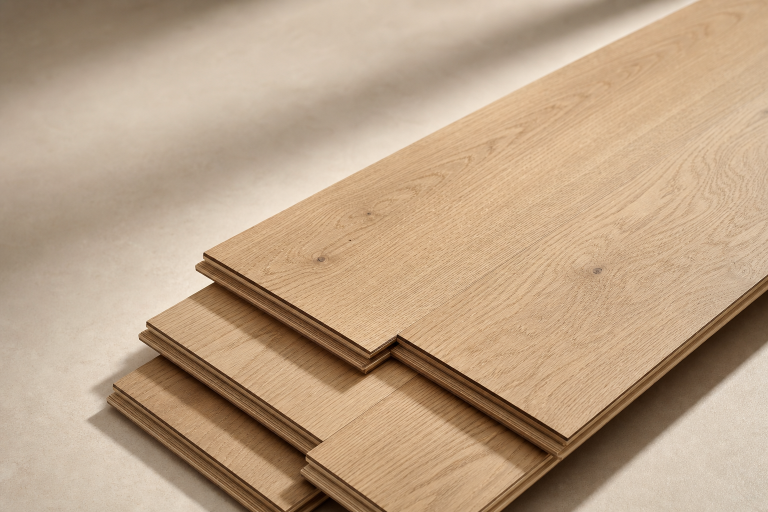
Hardness is useful, but it is not the whole story. A hard floor can still scratch, while a wire-brushed, textured, or naturally varied finish may make small marks less obvious.
Choosing Plank Width, Length, And Finish
Wide, long planks can make an open Denver great room feel calmer because there are fewer visual seams. In a narrow hall or smaller room, moderate widths and varied lengths may look more balanced. Wider boards also require a very flat subfloor, correct expansion planning, and stable indoor conditions.
Questions To Ask Before Choosing Wide Planks
- Is the subfloor flat, dry, and suitable for the selected installation method?
- Will sunlight strike the floor for several hours each day?
- Can the home maintain a consistent temperature and humidity?
- Will the new floor meet existing flooring in nearby rooms?
- Can extra boards be stored for future repairs?
For finishes, matte and low-sheen options generally hide dust, glare, minor scuffs, and light scratches better than high-gloss finishes. Satin provides a middle ground, while oil-look finishes offer a soft, natural visual effect. High-sheen floors can be striking, but they tend to reveal marks and reflected sunlight more readily.
Protecting Hardwood From Strong Sunlight
Sunlight gradually changes wood, furniture, and fabrics. Use blinds, curtains, or solar shades during peak afternoon exposure, especially at south- and west-facing windows. Rotate rugs and movable furniture when practical so one small area does not age differently from the rest of the room.
Installation Details That Affect Performance
Excellent flooring can still underperform when preparation is skipped. Before installation, the installer should verify moisture conditions, inspect subfloor flatness, confirm room temperature and humidity, and follow the manufacturer’s acclimation instructions. The correct adhesive, fasteners, or floating system must be used, and expansion space must be left around walls, cabinetry, and fixed objects.
- Test subfloor moisture before installation begins.
- Repair uneven areas that could create movement or hollow spots.
- Plan transitions, stair details, and board direction early.
- Use the product’s approved cleaning and maintenance guidance after installation.
Daily Care For Dry-Climate Hardwood Floors
Routine care is simple. Sweep with a soft broom, use a microfiber mop, or vacuum with a hard-floor setting. Wipe spills promptly with a dry or lightly damp cloth, and avoid soaking the floor or using steam unless the manufacturer specifically permits it. Add mats near exterior doors to catch snow, salt, and grit. Felt pads beneath furniture, trimmed pet nails, and a humidifier during the heating season can prevent avoidable wear.
Seasonal Care Plan
- Winter: Monitor indoor humidity and remove snow, salt, and gravel quickly.
- Spring: Clean entryways thoroughly and inspect for moisture-related issues.
- Summer: Manage intense sunlight and avoid major humidity swings.
- Fall: Refresh mats, furniture pads, and entry protection before snow season.
Common Buying Mistakes To Avoid
- Choosing by color alone without comparing construction and finish.
- Ignoring the subfloor type and moisture conditions.
- Assuming every engineered floor has the same wear layer or core quality.
- Skipping humidity control in winter.
- Ordering too little extra material for repairs or future matching.
- Failing to view samples in morning, afternoon, and evening light.
Frequently Asked Questions
Is engineered hardwood a good choice for Colorado?
It can be an excellent choice because quality-engineered construction often offers added stability. The right product still depends on the subfloor, room conditions, installation method, and household needs.
Are wide planks a problem in a dry climate?
Not necessarily. Wide planks can perform well when the flooring is properly constructed, the subfloor is prepared, and indoor humidity remains reasonably stable.
How long can hardwood flooring last?
Service life depends on species, finish, traffic, cleaning habits, construction, and whether the floor can be refinished. Well-maintained wood flooring can serve a home for many years.
Final Decision Checklist
- Review indoor humidity and sunlight exposure.
- Compare solid and engineered construction.
- Select a species and finish for the household’s traffic level.
- Inspect the subfloor and confirm installation requirements.
- Reserve extra boards and prepare a seasonal maintenance plan.
Colorado hardwood flooring performs best when product selection, installation, sunlight control, and daily care work together. Choose a floor that suits the room, maintain balanced indoor conditions, and invest in careful preparation for a natural, durable result through every season.





5 Comments
sidahmed ould
i need it
heather
This is a handy list for homes with hardwood flooring. I like the tip about protecting the floor in sunlight.
Tamra Phelps
Funny how floorinng trends change. When my grandma died in the 1990s, we pulled up her carpet and found the most beautiful oak floors, like new, because she had covered them in the 70s when carpet was the thing, lol. Hard to imagine anyone would cover that oak!
Rose
This is excellent info! I have parquet floors, and don’t like them, and in places it shrunk and there are spaces. I now know to check into the comprehensive plan for choosing a new floor, not that I can afford it. It is fun to imagine, though!!!
Terri Quick
Nice post