Revolutionizing Full-Arch Dental Implants: The Latest Innovations You Need to Know
Key Takeaways
- Digital workflows and AI are redefining the precision and efficiency of full-arch dental implant procedures.
- Photogrammetry and 3D printing innovations are making implant processes faster and more predictable.
- Dental implants are benefiting from improved materials and patient-focused treatment planning for greater success and aesthetics.
Table of Contents
- Digital Workflows and AI Integration
- Photogrammetry and 3D Printing
- Patient-Centered Approaches
- Advanced Materials and Surface Treatments
- Immediate Loading Protocols
- Robotic-Assisted Implant Placement
- Biotechnology and Regenerative Science
- Conclusion
Advancements in dental technology have dramatically changed what is possible for patients in need of comprehensive smile reconstruction. Modern full-arch dental implants now deliver more precise, predictable, and durable results thanks to cutting-edge tools and techniques. By leveraging digital workflows, improved materials, and patient-focused innovations, providers can offer streamlined and superior care. For example, options like all on X dental implants are becoming the gold standard for those who seek a functional and beautiful full-arch solution.
Understanding the latest advancements sheds light on how clinicians are overcoming past challenges, from reducing surgery time to enhancing the comfort and appearance of restorations. New technology continues to bridge gaps between traditional methods and futuristic solutions, ensuring that more people than ever can regain their confidence with a lasting new smile.
Digital Workflows and AI Integration
Digital workflows are transforming every stage of full-arch dental implant treatment, blending advanced imaging, modeling, and planning into one integrated system. Artificial intelligence helps dentists analyze CBCT scans to determine ideal implant position and angulation. This reduces guesswork and significantly improves both patient safety and surgical outcomes. Digital planning tools allow clinicians to virtually simulate procedures and ensure the best possible fit and function for the final restoration. These enhancements streamline appointments and minimize post-surgical complications. Additionally, AI-driven design helps dental teams anticipate and mitigate risks, delivering consistently reliable results.
Photogrammetry and 3D Printing
Photogrammetry is another critical development reshaping the workflow for implant dentistry. Using digital photography, this tool accurately captures implant positions and relationships within a patient’s mouth. The benefit lies in its speed and exceptional accuracy, eliminating the need for lengthy or uncomfortable impression materials. When paired with 3D printing, clinicians can use photogrammetry data to rapidly produce custom surgical guides and provisional restorations on the same day as surgery. This combination not only saves time but also improves the predictability of implant placement, ensuring a better fit and reduced need for manual adjustments.
Patient-Centered Approaches
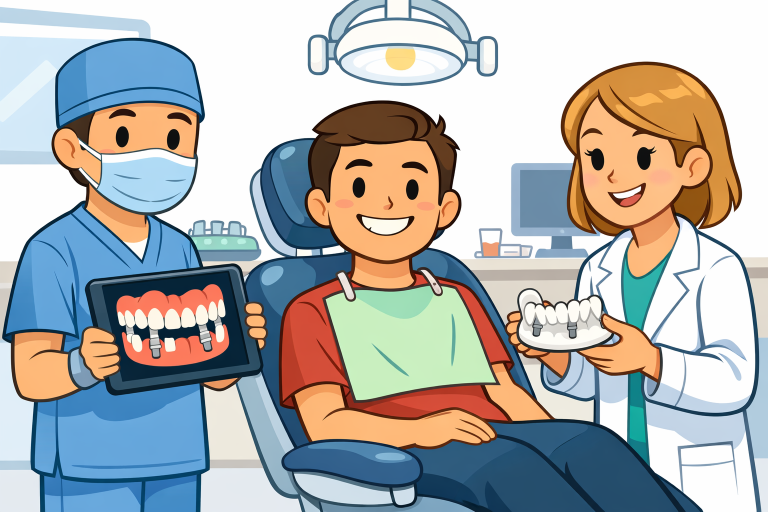
As patients become more knowledgeable and invested in their oral health, the demand for customizable, aesthetically-driven implant solutions continues to rise. New digital smile design (DSD) platforms enable patients to preview and participate in their treatment planning process. By collaborating with clinicians and dental labs before treatment, patients can tailor their full-arch restorations to match their facial structure, personality, and esthetic preferences. Personalized approaches like these reduce anxiety and lead to greater satisfaction with the final result.
Advanced Materials and Surface Treatments
Material science has opened new frontiers for full-arch dental implants. Today’s restorations often use zirconia and high-strength ceramics for improved durability, natural appearance, and resistance to wear. Bioactive surface coatings on implant fixtures promote more secure bone integration, which is critical in achieving long-term success. Some of these specialized coatings even carry antimicrobial properties, lowering the chance of infection and aiding in the rapid healing of gum and bone tissue. These advances extend the lifespan of implants and make optimal oral health much more attainable.
Immediate Loading Protocols
Immediate loading protocols let patients leave surgery with a new set of temporary teeth, the very same day. Recent innovations in surgical planning and intraoral scanning make this possible. Digital planning tools, including photogrammetry and 3D-printed guides, help clinicians place implants with unmatched accuracy. These advancements allow for provisional restorations that are not only functional but esthetically pleasing, making the entire treatment experience far more convenient. Predictability and speed, once impossible, are now well within reach for the majority of candidates.
Robotic-Assisted Implant Placement
Robotic technology in dentistry has evolved to assist clinicians with precision-guided implant surgery, especially in complex full-arch cases. Systems such as Yomi and X-Guide use real-time digital feedback, combining human expertise with robotic accuracy. The robots provide haptic guidance during surgery, ensuring each implant is placed at exactly the right position and angle. This not only improves efficiency but also reduces risks associated with manual freehand placement. For patients, this means quicker procedures, less discomfort, and more predictable results.
Biotechnology and Regenerative Science
One of the most exciting developments in full-arch implantology is the blending of biotechnology and regenerative therapies. Tissue engineering options, such as growth factors and autologous platelet concentrates, mean faster healing and improved integration of implants. Regenerative biomaterials further decrease the risk of failure by promoting new tissue formation and supporting long-term stability. These methods represent a promising future for cases previously considered too complex for implant therapy.
Conclusion
The landscape of full-arch dental implants is rapidly advancing with each innovation, providing unparalleled benefits in precision, comfort, aesthetics, and long-term results. Technological strides in digital planning, AI, advanced materials, robotics, and regenerative science are making it easier for clinicians to deliver exceptional care tailored to each patient’s needs. As dental professionals continue to adopt and refine these new tools, patients can expect outcomes that surpass previous standards, ensuring healthy, beautiful smiles for years to come.



One Comment
Terri Quick
I need to get my teeth fixed