The Evolution of the Gaming World: How Online Casinos Have Changed the Entertainment Industry
Once upon a time, gambling was about going to a brick-and-mortar casino, dressing up in your finest clothes, and sitting at a green poker table with a glass in hand. That image still lives on in our collective imagination, reinforced by decades of Hollywood films and glamorous marketing campaigns. But the reality for today’s players is fundamentally different. In just a few decades, online casinos have revolutionized the way millions of people around the world choose to entertain themselves and try their luck.
To understand how we got here, we need to look back to the early days of internet gambling. When the first online casinos emerged in the mid-1990s, they were rudimentary in nature — pixelated graphics, limited game offerings, and widespread skepticism among players who didn’t trust the security of digital transactions. It was a fragile beginning to what would become an industry worth hundreds of billions of dollars globally.
The Role of Technology in the Gaming Revolution
No factor has played a greater role in the rise of online casinos than technological advancements. Broadband internet replaced the frustratingly slow modem connections and opened the door to more advanced games with richer graphics and smoother gaming experiences. The arrival of smartphones in the late 2000s was the next big turning point — suddenly players could enjoy their favorite games anywhere, anytime, whether they were sitting on the couch at home or waiting for the subway.
Today, modern online casinos feature games with impressive three-dimensional graphics, dynamic sound and lighting effects, and live dealers streamed in real time from professional studio environments. Live casino technology has become particularly popular because it combines the convenience of playing at home with the authenticity of a real casino atmosphere. Players can interact with the dealer via chat, watch the decks being shuffled in real time, and experience the same excitement as a brick-and-mortar casino — all without leaving home.
Regulation and Licensing: A Complex Reality
One of the most discussed issues in the online gambling industry is regulation. Sweden is a prime example of how a country has actively attempted to shape and control the gambling market. The Swedish gambling reform that came into effect in 2019 created a licensing system administered by the Swedish Gambling Authority, with the goal of channeling gambling to regulated and safe operators.
The system has its advantages: licensed casinos must adhere to strict rules on responsible gambling, offer self-exclusion tools and ensure that players are protected against fraud. Responsible gambling tools such as time limits, deposit limits and the ability to close your account have become standard features of reputable operators.
But the regulatory landscape is not simple. Many players actively seek alternatives outside the Swedish licensing system, and on the internet it is quite possible to find such alternatives. The term casino without a license refers to gaming platforms that operate outside the Swedish regulatory framework, often licensed in jurisdictions such as Malta, Curacao or Gibraltar. These platforms can offer things that Swedish licensed casinos are not allowed to by law — such as bonuses without wagering requirements or access to Spelpaus-exempt promotions. It is important to understand that the choice to play on such platforms involves personal responsibility, as player protection can vary significantly.
Game Selection: From Classics to Innovation
One of the biggest drivers behind the popularity of online casinos is the huge variety of games. While a brick-and-mortar casino might offer hundreds of slot machines and a dozen or so table games, a well-stocked online casino can have thousands of titles available. Providers like NetEnt, Microgaming, Play’n GO and Pragmatic Play are constantly producing new slots with innovative features, exciting themes and lucrative bonus opportunities.
Classic games like blackjack, roulette and baccarat have been digitized and adapted for the online environment, often with dozens of variations to choose from. Video poker has found a new audience online, and progressive jackpot games offer life-changing winning potential that attract players from all over the world. Megalotto and Mega Fortune are examples of games where a single spin can turn an ordinary day into something extraordinary.
Responsible Gambling: An Issue That Cannot Be Ignored
Amidst all the excitement and entertainment, there is one aspect of the gaming world that should never be forgotten: gambling addiction is a real problem that affects a small but vulnerable segment of the gaming population. In recent years, industry associations, authorities and reputable operators have increasingly invested resources in identifying and helping players who are at risk.
Tools like Spelpaus.se in Sweden allow players to self-exclude themselves from all licensed operators with the click of a button. Many casinos also offer internal tools that allow players to set daily, weekly or monthly deposit limits — a simple but effective way to keep gambling under control. Education and awareness are also important components; understanding the odds, how slot machines work and accepting losses as part of the cost of entertainment rather than a financial failure are basic insights every player should have.
The Future Gaming Landscape
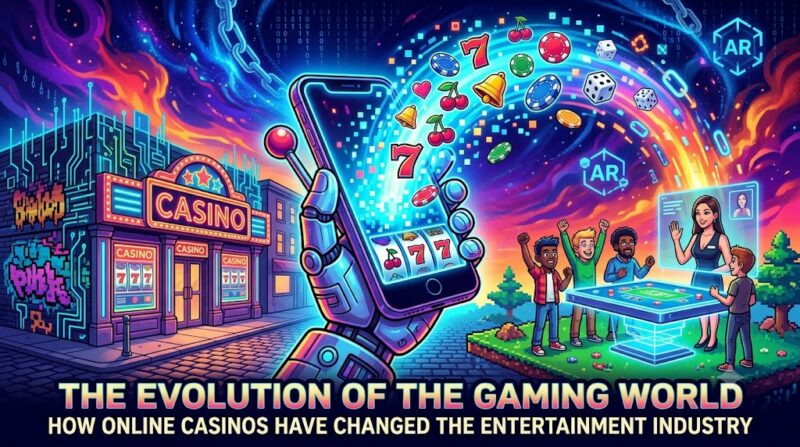
What’s next in the ever-evolving world of gaming? Virtual reality and augmented reality are technologies that have long been promised to be the next big revolution in online gaming. VR casinos that allow players to physically navigate a digital casino space, interact with other players, and experience the games in a whole new depth are slowly starting to take shape. Blockchain technology and cryptocurrencies are also introducing new possibilities in terms of transparency, security, and anonymity in financial transactions.
Artificial intelligence is playing an increasingly important role, not only in game design but also in how casinos identify player behavior that may indicate problem gambling. Machine learning algorithms can analyze thousands of data points and flag troubling patterns long before they become destructive — a positive application of technology that is otherwise often debated from a privacy perspective.
The journey of online casinos from simple text-based games to sophisticated, multi-dimensional entertainment platforms is one of the most fascinating technological and cultural transformations of the past three decades. Whether you are an avid player, a curious observer or an industry insider, there is no doubt that the world of gaming continues to change at a pace that makes the future exciting and difficult to predict. The only thing that is certain is that the evolution is far from complete.




One Comment
Terri Quick
Thank you for sharing