A Patient-Friendly Guide to Tooth Replacement After Major Jawbone Loss
Table of Contents
- Why Bone Loss Changes Implant Planning
- Common Causes of Jawbone Loss
- How Candidacy Is Evaluated
- Treatment Options
- When Bone Grafting May Help
- Advanced Implant Options
- Risks and Health Factors
- What Treatment May Involve
- Long-Term Maintenance
- Questions to Ask
- Final Takeaway
Major jawbone loss can make replacing missing teeth feel overwhelming, but it does not automatically rule out dental implants. The key is finding a plan that fits the amount and location of remaining bone, overall health, bite, goals, and budget. Some people may be candidates for conventional implants, while others may need grafting, an implant-supported denture, or a different solution.
In selected upper-jaw cases, advanced treatment such as zygomatic implant surgery may be discussed when standard implant placement is not suitable. This type of care requires detailed planning and is not the right path for every person, but it illustrates why an individualized evaluation matters.
Why Bone Loss Changes Implant Planning
Implants need enough healthy bone to provide stable support. After a tooth is lost, the portion of the jawbone that once supported it can gradually change. Gum disease, infection, injury, and years of wearing removable dentures can also affect the shape and volume of the jaw. Bone loss may make treatment more complex or extend the timeline, but it does not mean implants are impossible.
Common Causes of Jawbone Loss
The cause matters because it can influence both the treatment plan and the chance of future problems. For example, a person who lost a tooth years ago may have bone shrinkage in one small area, while someone with advanced periodontal disease may need broader gum and bone care first.
- Long-term tooth loss
- Advanced gum disease
- Untreated dental infection
- Facial trauma or injury
- Long-term denture wear
- Previous implant or graft complications
- Medical conditions or medications that can affect healing
How Candidacy Is Evaluated
A recommendation should follow a careful examination, not a quick estimate. The dental implant candidacy guidance from oral and maxillofacial surgeons also emphasizes that bone loss, medical conditions, smoking, and current denture use should be considered in the planning process.
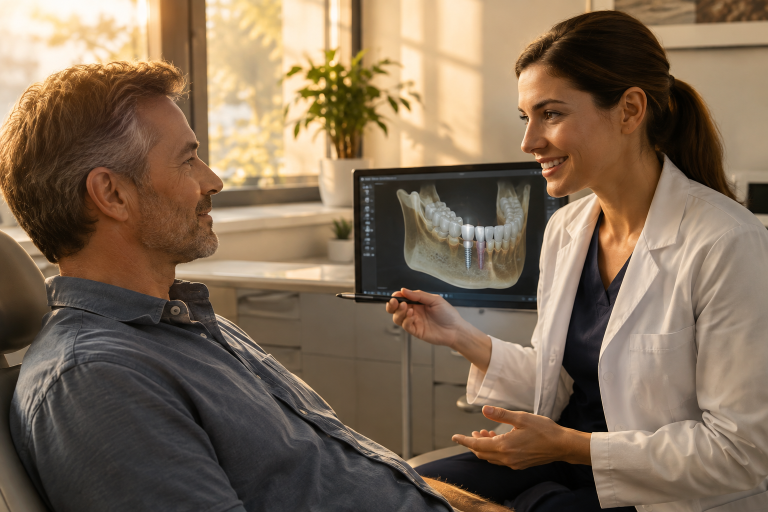
- Medical history: Review health conditions, medications, allergies, and past surgeries.
- Oral examination: Check the gums, bite, remaining teeth, soft tissue, and signs of infection.
- Digital imaging: X-rays or 3D scans can show bone dimensions and nearby structures, including nerves and sinuses.
- Restorative planning: Determine whether the goal is a single tooth, multiple teeth, a removable denture, or a full-arch restoration.
Treatment Options
There is no single best option for everyone. A dentist or surgical specialist may compare several approaches based on anatomy and treatment priorities.
- Traditional implants: May be possible when enough healthy bone remains in the planned area.
- Bone grafting: May add bone volume before or during implant treatment.
- Sinus augmentation: May create space for implant support in selected upper-jaw areas.
- Short or angled implants: May be considered when anatomy allows.
- Implant-supported dentures: Can help stabilize a removable denture without requiring a fixed restoration.
- Bridges or conventional dentures: May be appropriate when implant surgery is not preferred or advisable.
When Bone Grafting May Help
Bone grafting is a procedure intended to build or preserve bone in an area that is too narrow, too short, or otherwise unable to support the planned implant. Common approaches include socket preservation after extraction, ridge augmentation, and sinus lifts. The graft material and technique depend on the location and purpose of treatment.
Potential tradeoffs of grafting
- Potential benefit: It may create a foundation for a more conventional implant plan.
- Possible drawback: It can add surgery, cost, recovery needs, and healing time before the final restoration.
Ask what material is proposed, how healing will be monitored, and whether an implant may be placed at the same visit or later.
Advanced Implant Options
When the upper jaw has lost substantial bone, some clinicians may discuss implants anchored outside the usual tooth-bearing ridge. These cases rely on three-dimensional imaging, precise surgical planning, and coordinated design of the final teeth. They are not shortcuts around good oral health, healing, or follow-up care.
Long-term success also depends on controlling inflammation around implants. A consensus review on perm-implant disease prevention and care highlights the importance of risk assessment, oral hygiene, and ongoing professional maintenance. A second opinion can be useful if recommendations differ significantly.
Risks and Health Factors
Every surgical option has limits and potential complications. These can include infection, delayed healing, implant movement or failure, sinus or nerve-related concerns, gum inflammation around an implant, restoration wear or fracture, and the possible need for additional treatment. Smoking, uncontrolled diabetes, active gum disease, poor cleaning habits, and some medications may affect planning or healing. Share a complete health and medication history with the dental team.
What Treatment May Involve
- Consultation: Discuss goals, health history, budget, and previous dental experiences.
- Imaging and diagnosis: Review available bone and nearby anatomy.
- Preparatory care: Address infection, gum disease, and other concerns before surgery.
- Surgical phase: Complete grafting, implant placement, or another planned procedure.
- Healing and follow-up: Monitor comfort, tissue health, and stability.
- Restorative phase: Place the planned crown, bridge, denture, or full-arch restoration.
Long-Term Maintenance
Treatment does not end when the final teeth are placed. Brush twice daily, clean along the gumline and beneath bridges as instructed, and use floss, interdental brushes, or water flossers when recommended. Keep regular examination and cleaning visits, and report bleeding, swelling, pain, looseness, a bad taste, or bite changes promptly.
Questions to Ask
- What caused my bone loss, and how much healthy bone remains?
- Do I need a 3D scan or grafting?
- What are the realistic alternatives if I do not choose implants?
- How long could each option take, including healing?
- What risks are most relevant in my situation?
- What does the total cost include, including follow-up care?
- Who will place the implants and design the final restoration?
- Would a second opinion be helpful?
Final Takeaway
Severe jawbone loss can make tooth replacement more involved, but it does not end the conversation. A thorough evaluation can clarify whether grafting, advanced implant planning, an implant-supported denture, a bridge, or a conventional denture offers the safest and most practical path. The best choice is one that matches your anatomy, health, goals, budget, and ability to maintain the result over time.



2 Comments
Terri Quick
I have bone loss
heather
I didin’t know anything about this topic until I read your post. Thanks for sharing this important information.