How To Build A Balanced Offshore Fishing Setup
Key Takeaways
- Match the rod, reel, line, leader, and terminal tackle to the fishing method and likely fish size.
- Factor in depth, current, sinker or lure weight, and structure before selecting gear.
- A balanced outfit is usually more comfortable and easier to control than the heaviest available equipment.
- Spinning and conventional reels each have useful roles offshore.
- Safety equipment, weather planning, and local fishing rules are part of every complete setup.
Building an offshore setup is not simply a matter of buying the biggest rod and reel in the store. A productive outfit feels connected from end to end: the rod handles the intended lure or sinker weight, the reel carries enough line, the drag protects the connection, and the leader suits the conditions. Anglers comparing offshore-ready gear and rigging options can begin with a dependable offshore fishing resource such as Connleyfishing.com while keeping their own fishing plan at the center of every decision.
The right setup for casting a small live bait to mahi is very different from the equipment needed to drop heavy sinkers over deep structure. Balance improves comfort, casting control, lure presentation, hook-setting ability, and the angler’s ability to apply steady pressure once a fish is hooked.
Why Balance Matters More Than Maximum Strength
Oversized equipment can create problems when the presentation is light. A very heavy reel may make repeated casting tiring, while an overly stiff rod can make small baits difficult to cast and less natural in the water. At the other extreme, a rod with too little power may struggle to lift a heavy sinker, control a fish near structure, or keep an appropriate amount of pressure on a long run.
Think in terms of the method first. A light trolling outfit, a vertical jigging outfit, and a bottom-fishing outfit can all target fish offshore, but they work under different loads. The goal is not to use the strongest gear possible. It is to use equipment that performs predictably for the task.
Start With The Fishing Plan
Before buying or packing gear, define the trip. Ask whether you will troll, jig, bottom fish, cast lures, or fish live bait. Consider the expected depth, current, target species, boat layout, and likely sinker or lure weights. A charter trip may also limit rod space or provide specific tackle, while a private boat gives more flexibility to carry purpose-built outfits.
Current deserves special attention. A strong current may require a heavier jig or sinker to keep the bait in the strike zone. That does not always mean every component must become heavier, but it does mean the rod rating, line diameter, reel capacity, and terminal rig must work together.
Choosing The Right Rod
Power, Action, And Length
Rod power describes how much force is needed to bend the blank. Light- and medium-power rods suit smaller baits and lighter line. In contrast, medium-heavy and heavy rods are more appropriate for techniques involving larger fish, heavier weights, or strong structure. Follow the rod’s stated line and lure or sinker guidance rather than assuming more power is always better.
Action describes where the rod bends. Fast-action rods generally bend closer to the tip and can help with quick hooksets and direct lure control. Moderate actions bend deeper through the blank and can help cushion sudden surges, particularly when treble hooks are involved. Shorter rods often work well in tight cockpit spaces and during stand-up fights, while longer rods can provide more casting distance and help manage line angles around the boat.
Pairing The Reel With The Rod
Spinning Reels
Spinning reels are practical for casting live baits, jigs, and smaller plugs because they are easy to cast and allow quick changes in presentation. Select one with enough spool capacity for the line class, a smooth usable drag range, and construction intended for saltwater exposure. A larger spinning reel becomes useful when longer runs, heavier braid, or bigger fish are expected.
Conventional Reels
Conventional reels are common choices for trolling, deep dropping, and many bottom-fishing or heavy-jigging situations. A star-drag reel adjusts drag through a star-shaped control, while a lever-drag reel allows the angler to move quickly between preset drag positions. In either case, consider capacity, retrieve speed, cranking power, and how comfortably the reel fits the rod and fishing position.
Matching Line, Leader, And Knots
Braid offers a thin diameter for its breaking strength and relatively low stretch, which can help when fishing deep water or detecting subtle bites. Monofilament provides stretch and is commonly used as the main line or leader material. Fluorocarbon leader is often selected when anglers want a tougher, lower-visibility leader option. The best choice depends on the rig, structure, fish, and local conditions.
Inspect the main line, leader, knots, crimps, and connections before departure. Replace the line that feels rough, flattened, frayed, or visibly damaged. After fishing around reefs, wrecks, or other hard structure, run fingers carefully along the leader and replace it if abrasion is present. Check hooks for sharp points, corrosion, and bent wire before trusting them on a serious bite.
Build Setups Around Common Offshore Methods
- Trolling: Use an outfit with enough line capacity, dependable drag control, and a rod designed to hold steady pressure. Planer, downrigger, outrigger, and flat-line positions can place different demands on the rig.
- Jigging: Match the rod’s action to the jig weight and depth. A responsive rod and a reel with an efficient retrieve help maintain control through repeated drops and retrieves.
- Bottom fishing: Prioritize a strong butt section, reliable drag, appropriate sinker rating, and sufficient line capacity. Fish near a structure can quickly gain an advantage if the rig cannot maintain pressure.
- Live bait and casting: A lighter, well-matched spinning outfit can cast smaller baits more naturally and cover many nearshore or offshore situations.
Do Not Forget Terminal Tackle
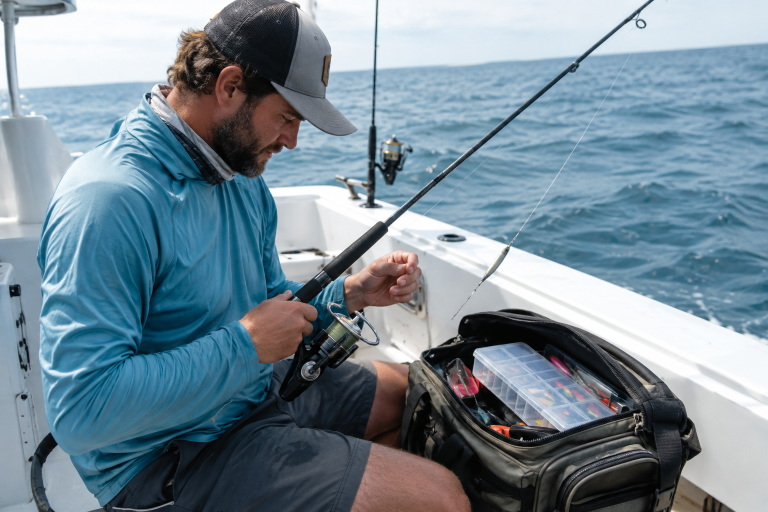
Hooks, swivels, snaps, split rings, sinkers, crimps, and spare leaders are as important as the main rod and reel. Carry terminal tackle organized by method so a change from trolling to bottom fishing does not require searching through loose gear. A compact day-trip kit should include spare hooks, leader material, swivels, sinkers, cutters, pliers, crimping tools if needed, and pre-tied or ready-to-build rigs.
Safety Gear And Rules Belong In The Setup
Every passenger should have access to an appropriate personal flotation device, and the boat should carry communication, navigation, first-aid, signaling, and basic repair equipment suited to the trip. Check marine forecasts for wind, waves, visibility, and changing conditions before departure, then continue watching the weather while offshore.
Also, check current local size limits, bag limits, seasons, licensing requirements, and protected-species rules before fishing. Tournament and record pursuits can involve additional standards, and ethical and sporting angling practices provide a useful general reference, but local regulations always take priority.
A Simple Pre-Trip Setup Review
- Confirm the target species, depth, and planned technique.
- Check rod power, action, and lure or sinker rating.
- Inspect reel drag, line level, handle, guides, and connections.
- Replace worn leader material and damaged hooks.
- Pack spare terminal tackle and tools in secure storage.
- Review the forecast, boat safety equipment, and local rules.
Conclusion
A balanced offshore fishing setup is built around the trip, not around a single oversized piece of gear. When the rod, reel, line, leader, terminal tackle, and safety plan all match the technique and conditions, fishing becomes more comfortable, controlled, and adaptable. Start with a clear plan, inspect every connection, and make changes when the depth, current, or target species changes.


2 Comments
heather
This was a fun post to read. It has been forever since I have done some offshore fishing.
Terri Quick
My father lived to fish (R.I.P 🌹)